
A roof does not age in exactly the same way across every home. Asphalt shingles may lose protective granules, metal roofing may develop fastener or coating problems, and slate may remain functional for decades while its supporting components deteriorate. The most useful inspection method depends on the roof material, its installation details, and the seasonal exposure it receives.
For households in Walworth, NY, repeated freeze-thaw cycles, snow, wind, ice buildup, summer heat, and moisture can all influence how aging appears. A roof that looks acceptable from the ground may still have vulnerable areas around chimneys, valleys, vents, skylights, and roof edges.
How can aging be identified on an asphalt shingle roof?
An aging asphalt shingle roof often shows surface wear before it develops an obvious leak. Look for changes in the shingles themselves as well as signs that water is no longer being directed away properly.
Common indicators include:
- Areas where protective granules have collected in gutters or downspout outlets
- Shingles that appear unusually smooth, faded, or patchy
- Curling corners, lifted edges, or blister-like surfaces
- Cracked, split, or missing shingles
- Dark streaks caused by algae growth, which may affect appearance but do not always mean the roof is failing
- Exposed or deteriorated flashing around penetrations and roof transitions
- Sagging areas or recurring damp spots in the attic
Granule loss is expected to increase as asphalt shingles age, but heavy accumulation after a storm or large bare patches on the roof deserve closer attention. Curling can result from age, poor attic ventilation, manufacturing defects, or long-term heat exposure. In a cold climate, repeated expansion and contraction may make older shingles more brittle.
The age of the roof also matters. Many asphalt roofs are commonly designed for a limited service life, but actual performance varies with shingle quality, ventilation, installation, shade, moisture, and storm exposure. The installation date is useful, but visible condition is more reliable than age alone.
What does aging look like on a metal roof?
Metal roofing can remain serviceable for many years, but its aging problems are often related to fasteners, seams, coatings, and penetrations rather than widespread surface deterioration.
Signs to watch for include:
- Rust at cut edges, exposed fasteners, laps, or damaged coating
- Loose, backed-out, or missing fasteners
- Open seams or separated panels
- Failed sealant around vents, chimneys, and other penetrations
- Water stains below roof transitions
- Paint or protective coating that is peeling or chalking
- Dents or deformed panels after hail, falling branches, or other impact
- Gutters or trim pulling away from the roof edge
Standing seam metal roofs generally have fewer exposed fasteners, but seams, clips, flashing, and penetrations can still age. Corrugated or exposed-fastener systems may show problems first around the fastener washers. Once washers harden or crack, small leaks may occur even when the panels look sound.
Metal also expands and contracts with temperature changes. Movement is normal, but excessive noise, distorted seams, or stressed flashing may indicate that the system is not accommodating movement properly.
How do wood shakes and shingles show their age?
Wood roofing usually gives visual clues through texture and moisture damage. Aging wood shakes or shingles may become split, cupped, brittle, moss-covered, or darkened from prolonged dampness.
Look for:
- Cracks running with or across the grain
- Splitting at the edges or fastener locations
- Cupping, curling, or loose pieces
- Soft areas caused by decay
- Moss, lichen, or organic growth that keeps the surface damp
- Excessive discoloration on shaded roof sections
- Missing or displaced shakes after wind
Wood roofing can be especially sensitive to poor drying conditions. Overhanging branches, blocked roof valleys, clogged gutters, and limited airflow may keep portions of the roof wet for too long. In a seasonal climate, moisture trapped under snow or ice can add stress to already weakened wood.
A small amount of color variation is not necessarily a structural problem. Softness, splitting, and repeated movement are more meaningful signs of deterioration.
How can an older slate roof be evaluated?
Slate itself can last much longer than many other roofing materials, but the roof may still develop problems in its fasteners, flashing, underlayment, or supporting structure.
Aging signs include:
- Broken, chipped, or sliding slates
- Several replacement pieces with noticeably different thicknesses
- Rusted or exposed fasteners
- Deteriorated flashing around chimneys, walls, and valleys
- Loose ridge components
- Slates that sound dull or crumble when examined by someone qualified to handle the material
- Water stains in the attic beneath slate joints
Walking directly on slate can break it and create additional damage. A ground-level inspection using binoculars is safer for residents. Because slate is heavy, attic sagging or structural movement should not be ignored. The visible surface may remain attractive while the roof’s support system or flashing has become vulnerable.
What should homeowners know about flat or low-slope roofs?
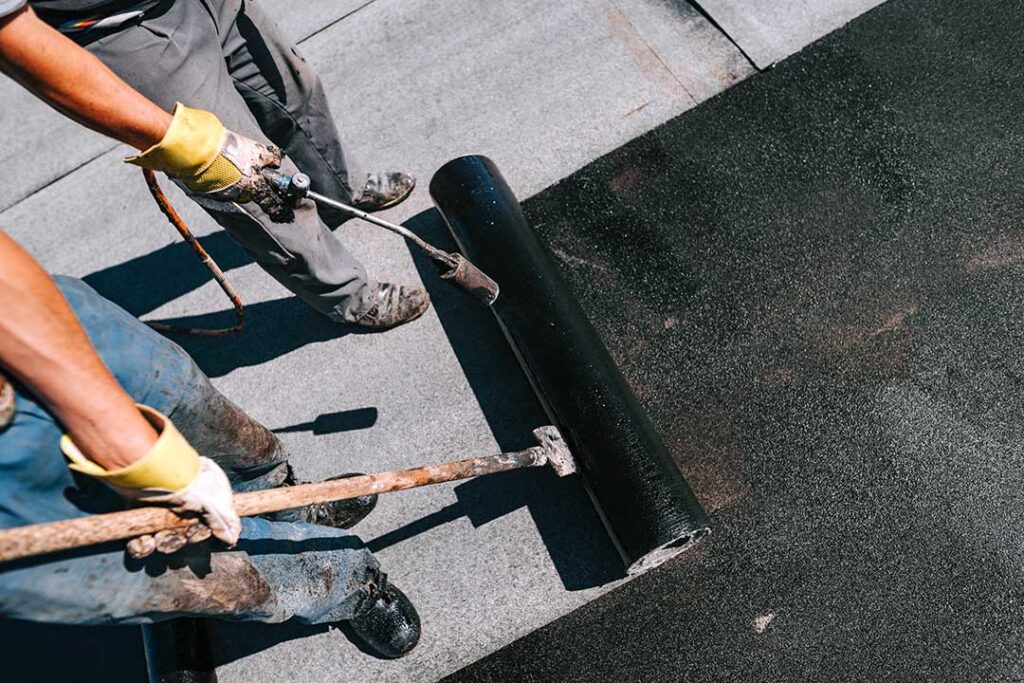
Flat and low-slope roofs age differently because drainage is slower and ponding water can become a major concern. These roofs may use membranes, modified bitumen, built-up roofing, or other systems with seams and edge details that require close observation.
Warning signs include:
- Water that remains on the roof after weather has cleared
- Blisters, bubbles, wrinkles, or open seams
- Cracks around drains, edges, and penetrations
- Deteriorated coatings
- Loose edge metal or lifted membrane
- Interior staining below low areas
- Soft or spongy roof sections
A flat roof does not need to be perfectly level, but it should direct water toward drains or scuppers. Blocked drainage can accelerate aging, particularly after leaves, ice, or windblown debris collect near roof outlets. In colder weather, repeated freezing and thawing can enlarge small openings.
Which roof areas age first?
Roof aging is rarely uniform. The most vulnerable locations are usually areas where different materials meet or where water changes direction.
Pay particular attention to:
- Valleys, where runoff is concentrated
- Eaves and rakes, which receive wind-driven moisture
- Chimney and wall intersections
- Plumbing vents, skylights, and other penetrations
- Areas beneath overhanging trees
- Roof sections shaded for much of the day
- Places where snow drifts form repeatedly
- Gutters, downspouts, and the lower edge of the roof
In Walworth, NY, snow and ice can conceal small defects for extended periods. After thawing, check the attic and upper-floor ceilings for new stains, damp insulation, or musty odors. A stain may remain visible after the leak has stopped, so its presence does not prove that water is entering at that exact moment.
Does a roof need replacement as soon as it looks old?
Not necessarily. Cosmetic aging, isolated repairs, and system-wide deterioration are different conditions. Faded color or algae staining may affect appearance without indicating immediate failure. By contrast, widespread brittleness, recurring leaks, sagging, extensive flashing failure, or large areas of missing material suggest more serious deterioration.
Avoid climbing onto a roof that is steep, wet, icy, fragile, or visibly damaged. Ground-level observation and attic checks can identify many warning signs without creating fall or breakage hazards. If the roof has structural sagging, active interior water entry, exposed electrical components, or extensive storm damage, evaluation by a qualified roofing or building professional is a safety issue rather than a routine maintenance task.
Keeping records of installation dates, repairs, storm damage, attic moisture, and recurring leak locations makes roof aging easier to track. Comparing photographs taken from the ground each spring and fall can also reveal gradual changes that are difficult to notice from one inspection to the next.
