
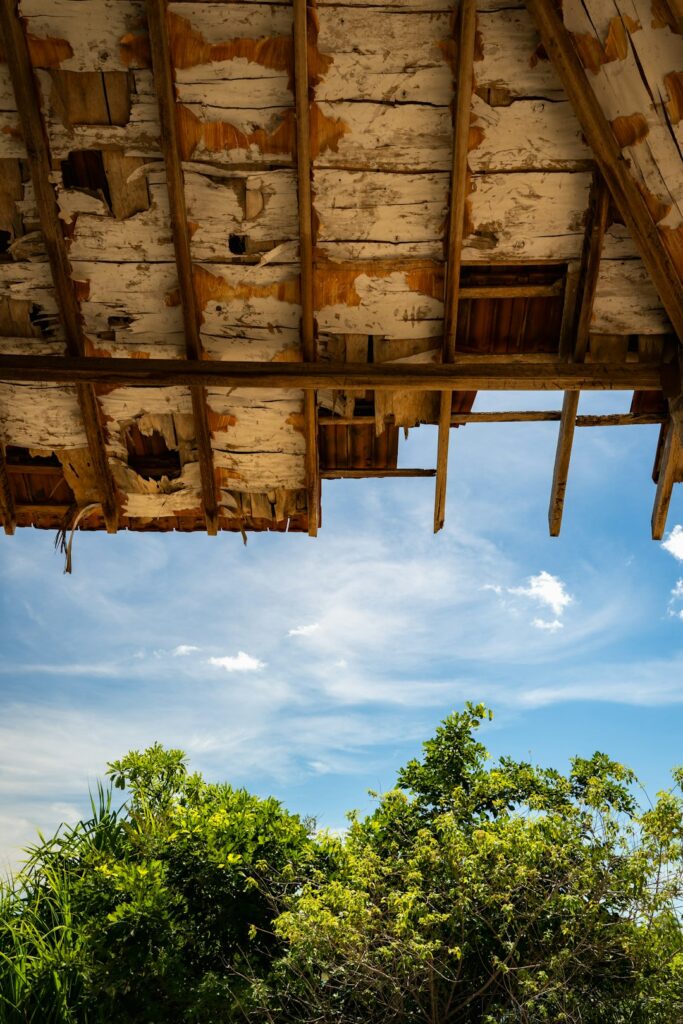
A roof rarely fails without warning. Before a major leak, structural problem, or widespread moisture damage develops, many homes show smaller clues that are easy to overlook. Learning to recognize those clues can help residents respond before damage spreads into the attic, ceilings, insulation, or walls.
What should homeowners look for from the ground?
The safest first inspection is often visual and can be done from the yard without climbing onto the roof. Look for changes in the roof’s shape, surface, edges, and drainage system.
Common warning signs include:
- Shingles that are missing, cracked, curled, buckled, or visibly lifted
- Dark patches that remain after surrounding areas have dried
- Uneven roof lines or areas that appear to sag
- Exposed underlayment, roof decking, or fasteners
- Loose or damaged flashing around chimneys, vents, skylights, and roof edges
- Gutters that are pulling away from the roofline
- Shingle granules collecting heavily in gutters or at downspout outlets
- Moss or algae that is covering large areas or holding moisture against the roofing material
A few isolated granules in a gutter may be normal, especially after a new roof installation. A noticeable increase in granule loss, combined with bald-looking shingle areas, can indicate that the protective surface is wearing away.
Binoculars can make this inspection easier. Avoid walking on shingles that are wet, icy, steep, or visibly deteriorated.
Which indoor signs may indicate a roof leak?
Water stains on ceilings or walls are among the clearest indoor clues, but the visible stain may not be directly below the point where water entered. Roof leaks can travel along rafters, roof decking, insulation, and framing before appearing inside the living space.
Pay attention to:
- Brown, yellow, or gray ceiling discoloration
- Fresh paint bubbling, peeling, or blistering
- Damp drywall or soft areas around ceiling corners
- Musty odors near the attic or upper floors
- Drips that appear during rain, snowmelt, or strong wind
- Damp insulation or darkened wood in the attic
- Daylight visible through the roof deck
A stain that dries after a storm should not automatically be dismissed. Intermittent leaks often appear only when wind pushes rain beneath a damaged shingle or when melting snow backs up behind ice along the eaves.
Why are roof edges and flashing common trouble spots?
Roof penetrations and transitions are more vulnerable than the broad, open sections of a roof. Flashing is installed where roofing meets a chimney, wall, vent, skylight, or other structure. If flashing bends, separates, corrodes, or loses its seal, water may enter even when the surrounding shingles look intact.
The lower edges of the roof also deserve attention. Gutters filled with shingle granules, leaves, or ice can slow drainage and allow water to back up beneath roofing materials. Fascia boards that appear stained, swollen, or soft may indicate repeated exposure to runoff.
In older homes, additions, porch roofs, and areas where two roof sections meet can have different slopes and drainage patterns. These transitions should be inspected carefully after major storms.
How do winter conditions create early roof damage?
Walworth, NY experiences the type of cold-weather conditions that can place repeated stress on roofing systems, including snow, freezing rain, ice, wind, and freeze-thaw cycles. Damage may begin during winter but remain hidden until spring rain exposes it.
Ice dams are a common example. They form when heat escaping into the attic warms part of the roof, allowing snow to melt. The water then refreezes near the colder roof edge. As the ice grows, meltwater can back up under shingles and enter the roof assembly.
Early signs of ice-dam-related damage may include:
- Icicles forming repeatedly along the same roof edge
- Thick ridges of ice in gutters or above them
- Ceiling stains near exterior walls
- Wet insulation or damp roof framing
- Drips that occur during sunny winter afternoons
- Paint or drywall damage near upper-floor ceilings
Large icicles do not always mean a roof is failing, but repeated ice formation deserves attention. Do not chip away at ice with a shovel, axe, or other sharp tool. That can damage shingles and create a fall hazard.
Heavy snow can also conceal broken shingles, damaged flashing, and sagging areas. After a major storm, examine the roofline from the ground once conditions are safe. A new dip or uneven section may signal excessive loading or weakened framing.

Can attic conditions reveal roof problems early?
Yes. The attic often reveals moisture damage before it becomes visible in finished rooms. Inspect during daylight with a flashlight, but do not step between ceiling joists unless solid flooring or proper boards are present.
Look for:
- Water marks on the underside of the roof deck
- Rusted nails or metal connectors
- Mold-like discoloration caused by persistent moisture
- Compressed, wet, or clumped insulation
- Frost on roof sheathing during cold weather
- Soft or deteriorated wood
- Bathroom or kitchen exhaust air discharging into the attic
Not every attic moisture problem is caused by a roof leak. Poor ventilation, air leakage, or an improperly routed exhaust fan can create condensation that resembles storm damage. The timing of the moisture can provide a clue: leaks often worsen during precipitation, while condensation may appear during extended cold weather.
Roof ventilation should not be blocked by insulation, and enclosed roof spaces need suitable ventilation or an intentionally designed unvented assembly. Changes to insulation or ventilation should be planned carefully because correcting one problem incorrectly can create another.
What roof damage is urgent?
Some conditions should be treated as immediate safety concerns rather than routine maintenance issues. These include:
- A visibly sagging roof
- A ceiling that is bulging or holding water
- Active water near electrical fixtures
- Large sections of missing roofing
- Significant tree impact
- Structural cracks, shifting rafters, or signs of collapse
- Heavy snow or ice accompanied by unusual creaking or movement
Keep people away from affected areas. If water is near electrical equipment, avoid touching switches or fixtures in the wet area. Roof access during ice, high wind, or unstable snow conditions can be dangerous and should not be attempted.
How often should a roof be checked?
A practical schedule is to inspect from the ground in spring and fall, then look again after severe wind, hail, heavy snow, or falling branches. Indoor ceilings and the attic should also be checked periodically, especially in older homes or homes with a history of leaks.
Keep simple records of stains, loose shingles, recurring ice buildup, and repairs. Photographs taken from the same locations can show whether a condition is stable or worsening.
Early roof damage is often easier to understand when several clues are considered together. A few loose granules may be minor, but granules combined with bald shingles, gutter debris, and attic moisture deserve closer attention. The goal is not to diagnose every problem from the ground; it is to recognize changes early enough to prevent a small defect from becoming extensive water or structural damage.
